UNITED STATES · VEHICLE RESEARCH

2006 Honda Cr-V

Reported problems, recalls & official records

Sport Utility Vehicle -3 source configurations

Evidence updated Nov 17, 2026 · Sources

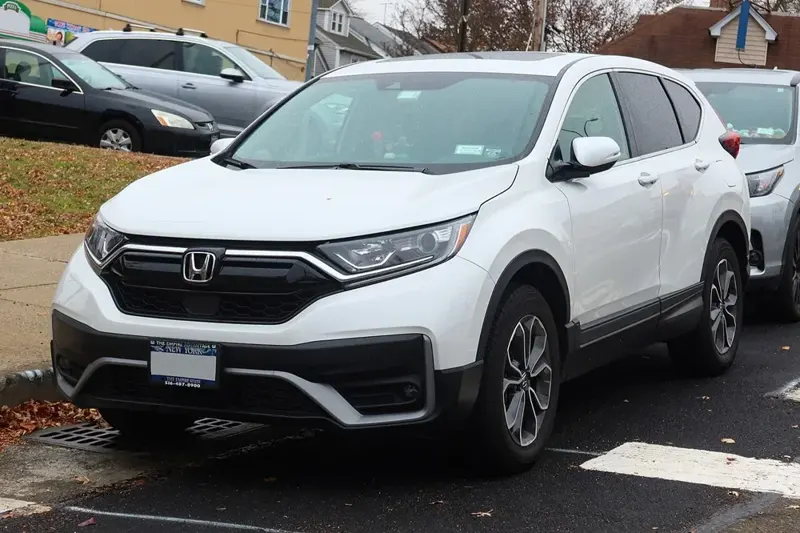
HondaHonda Cr-V model-family photograph; generation, year and trim may differ
Model-family image · year, generation and trim may differ.Photo: Kevauto · CC BY-SA 4.0
12Recall campaignsNHTSA · official notices
398US owner complaintsNHTSA · unverified reports
5US communicationsNHTSA · received 2020–2026
Source-ledResearch approachNo unsupported reliability grades
FROM RESEARCH TO YOUR NEXT CAR

2006 Honda Cr-V for sale

Explore matching dealer listings in United States. USD prices · miles.

Search listings
Show matching dealer listings

Open this section to check available listings. No listing request is made until you open it.

Source: Car Handshake and participating dealerships. Year, make and model must match to appear here; trims and specifications can differ. Listings do not establish vehicle condition or recall repair status.

Reported Problem Categories

US NHTSA complaints for the 2006 Honda Cr-V.

EXTERIOR LIGHTING
118
ELECTRICAL SYSTEM
75
AIR BAGS
74
POWER TRAIN
25
UNKNOWN OR OTHER
21

NHTSA documents known discrepancies in its bulk complaint file. Consumer allegations are not confirmed defects. One complaint can mention several categories. Counts are not failure rates.

At a Glance

Source configurations, without assumed specifications.

Research marketUnited States
Model year2006
Vehicle classSport Utility Vehicle -
DriveVaries by configuration
TransmissionVaries by configuration
Recall sourceNHTSA
Efficiency configurations3
VIN repair statusCheck with manufacturer
View source specifications

Safety Recalls (12)

US campaigns received since 2010; not a complete lifetime recall history, including historical or superseded records.

VISIBILITY:POWER WINDOW DEVICES AND CONTROLS

Honda (American Honda Motor Co.) is recalling certain 2002-2006 CR-V vehicles. Moisture may enter the driver side power window master switch, causing the switch to fail or melt.

NHTSA 20V768000 · Dec 10, 2020Official notice ↗
Safety consequence & remedy

Consequence: If the switch fails, it could overheat and smoke, increasing the risk of a fire.

Remedy: Honda will notify owners, and dealers will replace the power window master switch and inspect the wiring harness for damage, replacing it if necessary, free of charge. The recall began January 29, 2021. Owners may contact Honda customer service at 1-888-234-2138. Honda's number for this recall is P9D.

VEHICLE SPEED CONTROL:ACCELERATOR PEDAL

Dorman Products, Inc. (Dorman) is recalling certain Accelerator Pedal Assemblies part numbers 699-114 and 825-5029-1, sold as replacement parts for 2003-2006 Acura MDX, 2004-2008 Acura TL and TSX, 2003-2007 Honda Accord, 2005-2006 Honda CR-V, 2007-2011 Honda …

Read the complete source summary

Dorman Products, Inc. (Dorman) is recalling certain Accelerator Pedal Assemblies part numbers 699-114 and 825-5029-1, sold as replacement parts for 2003-2006 Acura MDX, 2004-2008 Acura TL and TSX, 2003-2007 Honda Accord, 2005-2006 Honda CR-V, 2007-2011 Honda Element, 2005-2008 Honda Pilot and 2006-2014 Honda Ridgeline vehicles. The rotating portion of the accelerator pedal assembly may bind. As such, these vehicles fail to comply with the requirements of Federal Motor Vehicle Safety Standard (FMVSS) number 124, "Accelerator Control Systems."

NHTSA 19E068000 · Oct 10, 2019Official notice ↗
Safety consequence & remedy

Consequence: If the accelerator pedal binds, the engine may not quickly return to idle after the pedal is no longer pressed, increasing the risk of a crash.

Remedy: Dorman will notify owners, and qualified service facilities will replace the affected accelerator pedal assemblies, free of charge. The recall began December 9, 2019. Owners may contact Dorman customer service at 1-800-523-2492, using option 5. Dorman's number for this recall is AS1019XXXX.

AIR BAGS:FRONTAL:PASSENGER SIDE:INFLATOR MODULE

Honda (American Honda Motor Co.) is recalling certain 2003-2006 Acura MDX, 2005-2012 RL, 2003-2007 Honda Accord, 2001-2005 Civic, 2003-2005 Civic Hybrid, 2001-2005 Civic GX NGV, 2002-2006 CR-V, 2003-2011 Element, 2007-2008 Fit, 2002-2004 Odyssey, 2003-2008 Pil…

Read the complete source summary

Honda (American Honda Motor Co.) is recalling certain 2003-2006 Acura MDX, 2005-2012 RL, 2003-2007 Honda Accord, 2001-2005 Civic, 2003-2005 Civic Hybrid, 2001-2005 Civic GX NGV, 2002-2006 CR-V, 2003-2011 Element, 2007-2008 Fit, 2002-2004 Odyssey, 2003-2008 Pilot, and 2006-2014 Ridgeline vehicles. The vehicles are equipped with passenger frontal air bag inflators assembled as a recall remedy part or replacement service part, that may explode due to propellant degradation occurring after long-term exposure to high absolute humidity, temperature and temperature cycling.

NHTSA 19V501000 · Jun 27, 2019Official notice ↗
Safety consequence & remedy

Consequence: An inflator explosion may result in sharp metal fragments striking the driver or other occupants resulting in serious injury or death.

Remedy: Honda will notify owners, and dealers will replace the passenger frontal airbag inflator, free of charge. The recall began August 12, 2019. Owners may contact Honda customer service at 1-888-234-2138. Honda's numbers for this recall are E5D and X5C.

AIR BAGS:FRONTAL:DRIVER SIDE:INFLATOR MODULE

Honda (American Honda Motor Co.) is recalling certain 2003 Acura 3.2CL, 2002-2003 3.2TL, 2003-2006 MDX, 2001-2007 Honda Accord, 2001-2005 Civic, 2003-2005 Civic Hybrid, 2001-2005 Civic GX NGV, 2002-2006 CR-V, 2003-2011 Element, 2002-2004 Odyssey, 2003-2008 Pil…

Read the complete source summary

Honda (American Honda Motor Co.) is recalling certain 2003 Acura 3.2CL, 2002-2003 3.2TL, 2003-2006 MDX, 2001-2007 Honda Accord, 2001-2005 Civic, 2003-2005 Civic Hybrid, 2001-2005 Civic GX NGV, 2002-2006 CR-V, 2003-2011 Element, 2002-2004 Odyssey, 2003-2008 Pilot and 2006 Ridgeline vehicles. These vehicles are equipped with driver frontal air bag inflators assembled as a recall remedy part or replacement service part, that may explode due to propellant degradation occurring after long-term exposure to high absolute humidity, temperature and temperature cycling.

NHTSA 19V499000 · Jun 27, 2019Official notice ↗
Safety consequence & remedy

Consequence: An inflator explosion may result in sharp metal fragments striking the driver or other occupants resulting in serious injury or death.

Remedy: Honda will notify owners, and dealers will replace the driver frontal air bag inflator, free of charge. The recall began August 12, 2019. Owners may contact Honda customer service at 1-888-234-2138. Honda's numbers for this recall are Q5A and Y58.

AIR BAGS:FRONTAL:DRIVER SIDE:INFLATOR MODULE

Honda (American Honda Motor Co.) is recalling specific 2003 Acura 3.2CL, 2013-2016 ILX, 2013-2014 ILX Hybrid, 2003-2006 MDX, 2007-2016 RDX, 2002-2003 3.2TL, 2004-2006, and 2009-2014 TL, 2010-2013 ZDX and 2001-2007 and 2009 Honda Accord, 2001-2005 Civic, 2003-2…

Read the complete source summary

Honda (American Honda Motor Co.) is recalling specific 2003 Acura 3.2CL, 2013-2016 ILX, 2013-2014 ILX Hybrid, 2003-2006 MDX, 2007-2016 RDX, 2002-2003 3.2TL, 2004-2006, and 2009-2014 TL, 2010-2013 ZDX and 2001-2007 and 2009 Honda Accord, 2001-2005 Civic, 2003-2005 Civic Hybrid, 2001-2005 Civic GX NGV, 2002-2007 and 2010-2011 CR-V, 2003-2011 Element, 2007 Fit, 2002-2004 Odyssey, 2003-2008 Pilot, and 2006-2014 Ridgeline vehicles. The affected vehicles received a replacement driver air bag inflator as part of a previous Takata inflator recall remedy or a replacement driver air bag module containing the same inflator type as a service part. Due to a manufacturing error, in the event of a crash necessitating deployment of the driver frontal air bag, these inflators may explode.

NHTSA 19V182000 · Mar 6, 2019Official notice ↗
Safety consequence & remedy

Consequence: An explosion of an inflator within the driver frontal air bag module may result in sharp metal fragments striking the driver, front seat passenger or other occupants resulting in serious injury or death.

Remedy: Honda will notify owners, and dealers will replace the driver's air bag inflator with an alternate inflator, free of charge. The recall began April 10, 2019. Honda owners may contact customer service at 1-888-234-2138. Honda's number for this recall is O41. Acura owners may contact customer service at 1-888-234-2138. Acura's number for this recall is U40.

AIR BAGS:FRONTAL:PASSENGER SIDE:INFLATOR MODULE

Honda (American Honda Motor Co.) is recalling certain 2003-2012 Honda Accord and Pilot, 2010 Accord Crosstour, 2001-2011 Civic, 2002-2011 CR-V, 2003-2004, 2006-2008 and 2011 Element, 2007 and 2009-2013 Fit, 2010-2012 Insight, 2002-2004 Odyssey, and 2012 Ridgel…

Read the complete source summary

Honda (American Honda Motor Co.) is recalling certain 2003-2012 Honda Accord and Pilot, 2010 Accord Crosstour, 2001-2011 Civic, 2002-2011 CR-V, 2003-2004, 2006-2008 and 2011 Element, 2007 and 2009-2013 Fit, 2010-2012 Insight, 2002-2004 Odyssey, and 2012 Ridgeline vehicles. The front passenger air bag may have been installed incorrectly during replacement.

NHTSA 18V268000 · Apr 26, 2018Official notice ↗
Safety consequence & remedy

Consequence: An incorrectly installed air bag may deploy improperly in the event of a crash, increasing the risk of injury.

Remedy: Honda will notify owners, and dealers will inspect and, if necessary, replace the passenger frontal air bag module assembly, free of charge. The recall began June 22, 2018. Owners may contact Honda customer service at 1-888-234-2138. Honda's numbers for this recall are K1P, and M1O.

AIR BAGS:FRONTAL:PASSENGER SIDE:INFLATOR MODULE

Honda (American Honda Motor Co.) is recalling certain 2005-2006 Acura MDX and Honda CR-V vehicles, 2005-2011 Honda Element vehicles, 2005-2012 Acura RL vehicles, 2006-2012 Honda Ridgeline vehicles, 2007-2008 Honda Fit vehicles and 2005-2008 Honda Pilot vehicle…

Read the complete source summary

Honda (American Honda Motor Co.) is recalling certain 2005-2006 Acura MDX and Honda CR-V vehicles, 2005-2011 Honda Element vehicles, 2005-2012 Acura RL vehicles, 2006-2012 Honda Ridgeline vehicles, 2007-2008 Honda Fit vehicles and 2005-2008 Honda Pilot vehicles originally sold, or ever registered, in Alabama, California, Florida, Georgia, Hawaii, Louisiana, Mississippi, South Carolina, Texas, Puerto Rico, American Samoa, Guam, the Northern Mariana Islands (Saipan), and the U.S. Virgin Islands, or "Zone A." Additionally, if not included in "Zone A" above, Honda is recalling certain 2005-2006 Acura MDX and Honda CR-V vehicles, 2005-2009 Acura RL and Honda Element vehicles, 2007-2008 Honda Fit vehicles, 2005-2008 Honda Pilot vehicles and 2006-2009 Honda Ridgeline vehicles originally sold, or ever registered, in Arizona, Arkansas, Delaware, District of Columbia, Illinois, Indiana, Kansas, Kentucky, Maryland, Missouri, Nebraska, Nevada, New Jersey, New Mexico, North Carolina, Ohio, Oklahoma, Pennsylvania, Tennessee, Virginia, and West Virginia, or "Zone B." Additionally, if not included in "Zone A" or "Zone B" above, Honda is recalling certain 2005-2006 Acura MDX and Honda CR-V vehicles, 2005-2008 Acura RL, Honda Element and Honda Pilot vehicles, 2007-2008 Honda Fit vehicles and 2006-2008 Honda Ridgeline vehicles originally sold, or ever registered in Alaska, Colorado, Connecticut, Idaho, Iowa, Maine, Massachusetts, Michigan, Minnesota, Montana, New Hampshire, New York, North Dakota, Oregon, Rhode Island, South Dakota, Utah, Vermont, Washington, Wisconsin, and Wyoming. These vehicles are equipped with certain air bag inflators assembled as part of the passenger frontal air bag modules used as original equipment or replacement equipment. In the event of a crash necessitating deployment of the front air bags, these inflators may rupture due to propellant degradation occurring after long-term exposure to absolute humidity and temperature cycling.

NHTSA 17V029000 · Jan 10, 2017Official notice ↗
Safety consequence & remedy

Consequence: An inflator rupture may result in metal fragments striking the vehicle occupants resulting in serious injury or death.

Remedy: Honda will notify owners, and dealers will replace the front passenger air bag inflator, free of charge. The recall bagan March 2017. Owners may contact Honda customer service at 1-888-234-2138. Honda's numbers for this recall are KD9 and KE0.

AIR BAGS:FRONTAL:PASSENGER SIDE:INFLATOR MODULE

Honda (American Honda Motor Co.) is recalling certain model year 2003-2006 Acura MDX, 2005-2011 Acura RL, 2005-2006 Honda CR-V, 2003-2011 Element, 2007-2008 Fit, 2003-2008 Pilot, 2002-2004 Odyssey, and 2006-2011 Ridgeline vehicles originally sold, or that have…

Read the complete source summary

Honda (American Honda Motor Co.) is recalling certain model year 2003-2006 Acura MDX, 2005-2011 Acura RL, 2005-2006 Honda CR-V, 2003-2011 Element, 2007-2008 Fit, 2003-2008 Pilot, 2002-2004 Odyssey, and 2006-2011 Ridgeline vehicles originally sold, or that have ever been registered, in Alabama, California, Florida, Georgia, Hawaii, Louisiana, Mississippi, South Carolina, Texas, Puerto Rico, American Samoa, Guam, the Northern Mariana Islands (Saipan), and the U.S. Virgin Islands, or "Zone A." Additionally, unless included in "Zone A" above, Honda is recalling certain model year 2003-2006 Acura MDX, 2005-2008 Acura RL, 2005-2006 Honda CR-V, 2003-2008 Element, 2007-2008 Fit, 2003-2008 Pilot, 2002-2004 Odyssey, and 2006-2008 Ridgeline vehicles originally sold, or that have ever been registered, in Arizona, Arkansas, Delaware, District of Columbia, Illinois, Indiana, Kansas, Kentucky, Maryland, Missouri, Nebraska, Nevada, New Jersey, New Mexico, North Carolina, Ohio, Oklahoma, Pennsylvania, Tennessee, Virginia, and West Virginia, or "Zone B." Lastly, unless included in "Zone A" or "Zone B" above, Honda is recalling model year 2002-2004 Odyssey and model year 2003-2004 Acura MDX, Honda Element, and Honda Pilot vehicles originally sold, or registered, in Alaska, Colorado, Connecticut, Idaho, Iowa, Maine, Massachusetts, Michigan, Minnesota, Montana, New Hampshire, New York, North Dakota, Oregon, Rhode Island, South Dakota, Utah, Vermont, Washington, Wisconsin, and Wyoming. These vehicles are equipped with certain air bag inflators assembled as part of the passenger frontal air bag modules, and used as original equipment or replacement equipment. In the event of a crash necessitating deployment of the front air bags, these inflators may rupture due to propellant degradation occurring after long-term exposure to absolute humidity and temperature cycling.

NHTSA 16V344000 · May 23, 2016Official notice ↗
Safety consequence & remedy

Consequence: An inflator rupture may result in metal fragments striking the vehicle occupants resulting in serious injury or death.

Remedy: Honda will notify owners, and dealers will replace the passenger frontal air bag inflator, free of charge. The recall began June 27, 2016. Owners may contact Honda customer service at 1-888-234-2138. Honda's numbers for this recall are KA0, KA1, KA2, and KA3.

AIR BAGS:FRONTAL:DRIVER SIDE:INFLATOR MODULE

Honda (American Honda Motor Co.) is recalling certain model year 2001-2007 Accord, 2001-2005 Civic, 2001-2004 Honda Civic GX, 2003-2005 Honda Civic Hybrid, 2002-2006 CR-V, 2003-2011 Element, 2002-2004 Odyssey, 2003-2008 Pilot, 2006 Ridgeline, 2003 Acura 3.2CL,…

Read the complete source summary

Honda (American Honda Motor Co.) is recalling certain model year 2001-2007 Accord, 2001-2005 Civic, 2001-2004 Honda Civic GX, 2003-2005 Honda Civic Hybrid, 2002-2006 CR-V, 2003-2011 Element, 2002-2004 Odyssey, 2003-2008 Pilot, 2006 Ridgeline, 2003 Acura 3.2CL, 2003-2006 Acura MDX, and 2002-2003 Acura 3.2TL vehicles. The affected vehicles are equipped with a dual-stage driver frontal air bag that may be susceptible to moisture intrusion and other factors, including manufacturing variability that, over time, could cause the inflator to rupture.

NHTSA 15V320000 · May 28, 2015Official notice ↗
Safety consequence & remedy

Consequence: In the event of a crash necessitating deployment of the driver's frontal air bag, the inflator could rupture with metal fragments striking the driver or other occupants resulting in serious injury or death.

Remedy: Honda will notify owners, and dealers will replace the driver frontal air bag inflator, free of charge. The recall began on July 1, 2015. Owners may contact Honda customer service at 1-888-234-2138. Owners may contact Acura customer service at 1-800-382-2238, select option 4. Note: Vehicles that have had their driver frontal air bag replaced previously as part of a recall remedy prior to September 12, 2014 need to have their air bag replaced under this recall as well. Vehicles that, on or after September 12, 2014, received a remedy for a prior driver frontal air bag inflator recall already received an inflator of a different design, and therefore are not included in this recall and do not require additional servicing. Note: This recall fully supersedes recalls 08V-593, 09V-259, 10V-041, 11V-260, 14V-351 and 15V-153. Honda's numbers for this recall are JQ9, JR0, JR1, JR2, JR3, JR4, JR5, JR6, JR7, and JR8.

ELECTRICAL SYSTEM

Honda is recalling certain model year 2002-2006 CR-V passenger vehicles, manufactured from February 19, 2002, through July 28, 2006. The driver-side power window switch may fail or melt.

NHTSA 12V486000 · Oct 5, 2012Official notice ↗
Safety consequence & remedy

Consequence: If the switch fails, it could overheat, smoke, and cause a fire. A switch failure, and a fire, could occur even if the vehicle is not in use. As a precaution, owners are advised to park outside until the recall repair has been performed.

Remedy: Honda will notify owners, and dealers will inspect and repair the switches, as necessary, free of charge. The safety recall began on November 2, 2012. Owners may contact Honda at 1-800-999-1009.

SUSPENSION:FRONT:CONTROL ARM:LOWER ARM

HONDA IS RECALLING CERTAIN MODEL YEAR 2006 CR-V VEHICLES. THE WELD STRENGTH ATTACHING THE SUB-FRAME BUSHING COLLAR TO THE PASSENGER-SIDE FRONT LOWER ARM IS INSUFFICIENT. THE COLLAR CAN SEPARATE FROM THE ARM DUE TO VIBRATION WHILE DRIVING.

NHTSA 12V124000 · Mar 23, 2012Official notice ↗
Safety consequence & remedy

Consequence: AS A RESULT, A LOSS OF STEERING CAN OCCUR, INCREASING THE RISK OF CRASH.

Remedy: HONDA WILL NOTIFY OWNERS, AND DEALERS WILL INSPECT THE PRODUCTION LOT STAMP ON THE PASSENGER-SIDE FRONT LOWER ARM AND, IF NECESSARY, REPLACE THE LOWER ARM, FREE OF CHARGE. THE SAFETY RECALL IS EXPECTED TO BEGIN ON OR ABOUT APRIL 17, 2012. OWNERS MAY CONTACT HONDA CUSTOMER SERVICE AT 1-800-999-1009.

ELECTRICAL SYSTEM

HONDA IS RECALLING CERTAIN MODEL YEAR 2006 CR-V PASSENGER CARS MANUFACTURED FROM OCTOBER 3, 2005, THROUGH JULY 21, 2006. THE DRIVER-SIDE POWER WINDOW SWITCH MAY FAIL OR MELT.

NHTSA 11V456000 · Sep 7, 2011Official notice ↗
Safety consequence & remedy

Consequence: IF THE SWITCH FAILS, THE POWER WINDOWS MAY BECOME INOPERATIVE PREVENTING THEM FROM BEING ROLLED UP OR DOWN. IF THE SWITCH MELTS, IT WILL PRODUCE SMOKE AND A FIRE COULD OCCUR.

Remedy: HONDA WILL NOTIFY OWNERS, AND DEALERS WILL REPLACE THE DRIVER SIDE POWER WINDOW SWITCH ASSEMBLY FREE OF CHARGE. THE SAFETY RECALL IS EXPECTED TO BEGIN ON OR ABOUT OCTOBER 5, 2011. OWNERS MAY CONTACT HONDA AUTOMOBILE CUSTOMER SERVICE AT 1-800-999-1009.

Reports Over Time

US complaints by filing month, latest 12 observed months.

A month with no bar is not evidence that no problems occurred. Publication and reporting delays affect totals.

Read chart data
2022-082
2022-111
2022-121
2023-042
2023-051
2023-071
2023-102
2024-041
2024-121
2025-011
2025-031
2025-061
RECHECK EVIDENCE LAB

The mileage lens

Where the available US complaint records fall by reported mileage.

Reported mileage at incidentMatched complaint records
Below 25,000 mi41
25,000–49,999 mi54
50,000–99,999 mi98
100,000–149,999 mi60
150,000+ mi33
Missing or excluded mileage112

286 of 398 matched complaints have positive, usable mileage. Source zero values can represent missing information and are excluded; values above 1.5 million miles are excluded. These are selected allegations with no vehicle-population denominator. The table cannot predict when your vehicle will fail. Mileage is retained in US source miles.

Crash flagged27US complaint allegations
Fire flagged16US complaint allegations
Towed flagged1US complaint allegations

Positive source flags are counted per deduplicated complaint, not verified incidents. Categories and flags can overlap; an unflagged or missing value does not prove an incident did not occur.

RECHECK EVIDENCE LAB

Your annual energy budget

Use official test estimates with your own distance and prices.

Enter a price to estimate your annual energy budget.

Scenario estimate, not a live price quote or total cost of ownership. Uses the selected source configuration’s combined test consumption. Weather, speed, battery condition, charging losses, taxes, maintenance, depreciation and insurance can change actual cost. Plug-in hybrids are excluded from this simple calculator because fuel and electricity use depend on charging behaviour. Your inputs stay in your browser.

Compare Model Years

Explore documented Honda Cr-V records.

Totals reflect different time on the road and configurations. Fewer reports do not establish greater reliability.

Compare vehicles side by side →

RECHECK EVIDENCE LAB

Your vehicle’s evidence passport

What to investigate first for the 2006 Honda Cr-V.

1. Check recall repairs

12 matched US recall campaigns. Start with the notices below and confirm applicability and repair completion for your VIN.

Review all 12 matched campaigns →

2. Know the reported themes

398 deduplicated US complaint records. The most frequently named component categories are:

  • exterior lighting · 118 records
  • electrical system · 75 records
  • air bags · 74 records

“Unknown or other” records are included in the total; they do not identify a component. Categories overlap. These are allegations, not confirmed defects or a failure rate.

Take a tailored checklist to your mechanic →
Coverage, sources and what remains unknown
Recall source
US NHTSA
Matched campaigns
12
US complaint records
398
Efficiency configurations
3
US investigations
5
Repair completion
Not established

Coverage boundary: US campaigns received since 2010; not a complete lifetime recall history Exact normalized make/model/year safety matches. Efficiency retains explicitly named source configurations; spelling/configuration differences may exclude records. US complaint counts do not establish Canadian experience or the probability of a defect.

Accident history, current mechanical condition, ownership, liens, individual recall applicability, repair completion and battery health are not established by this model-year report. No failure rate or reliability score is calculated from raw complaint totals.

Specifications & Efficiency

Official source configurations. No trim is assumed.

Source configurationFuel / powertrainCombined efficiencyRange
CR-V 2WD
Automatic 5-spd
Regular Front-Wheel Drive23 MPGData unavailable
CR-V 4WD
Automatic 5-spd
Regular 4-Wheel or All-Wheel Drive22 MPGData unavailable
CR-V 4WD
Manual 5-spd
Regular 4-Wheel or All-Wheel Drive21 MPGData unavailable

Official test estimates vary with configuration, driving and weather. Fuel codes are retained as published; US and Canadian test measures are shown in their source units. Plug-in hybrid source ranges and operating modes are shown separately; they are not added together.

More from the official configuration records

Figures belong to each source configuration. Test conditions and charging assumptions apply; tailpipe emissions exclude fuel and electricity production. No missing specifications are inferred.

CR-V 2WD · Automatic 5-spd · Front-Wheel Drive — source specification details
Vehicle classSport Utility Vehicle - 2WD
DriveFront-Wheel Drive
TransmissionAutomatic 5-spd
Tailpipe CO₂ emissions386.39130434782606 g/mi
CR-V 4WD · Automatic 5-spd · 4-Wheel or All-Wheel Drive — source specification details
Vehicle classSport Utility Vehicle - 4WD
Drive4-Wheel or All-Wheel Drive
TransmissionAutomatic 5-spd
Tailpipe CO₂ emissions403.95454545454544 g/mi
CR-V 4WD · Manual 5-spd · 4-Wheel or All-Wheel Drive — source specification details
Vehicle classSport Utility Vehicle - 4WD
Drive4-Wheel or All-Wheel Drive
TransmissionManual 5-spd
Tailpipe CO₂ emissions423.1904761904762 g/mi

Bulletins & Investigations

US official records; applicability in Canada is not established.

5 matched manufacturer communications · 5 matched investigations. Communications are not necessarily recalls or technical service bulletins.

EA11004 · Driver's Power Window Master Switch

This investigation was prompted by Preliminary Evaluation (PE) 10-047 and was based on reports from consumers alleging that smoke and/or fire, as defined in 49 CFR ? 579.4, had occurred inside of the driver's door.The subject vehicles, model year (MY) 2006 CR-V, were manufactured at two different assembly plants.The vehicles manufactured in Japan (Sayama plant) were produced with a power window master switch (PWMS) supplied by the Thai Toyo Denso Company, Ltd. (Denso).The vehicles manufactured in the United Kingdom (UK, Swindon, England plant) were produced with a PWMS supplied by the Omron Corporation (Omron).Honda provided 45 reports on the subject vehicles responsive to this investigation.Of this number, 24 reports concerned Japan-built vehicles, 19 reports on UK-built vehicles, and two reports without a vehicle identification number which could not be identified by assembly plant. Four of Honda's reports were duplicative of ODI reports.ODI received nine reports on the subject vehicles:five on Japan-built and four on UK-built vehicles, and one additional report on a MY 2005 UK built vehicle.The ODI reports can be reviewed at http://www-odi.nhtsa.dot.gov/owners/SearchNHTSAID under the following identification (ODI) numbers: 10343884, 10307287, 10321646, 10375324, 10386750, 10425406, 10437807, 10439880, 10469350, and 10406979.In most cases, it was reported that the PWMS and/or its electrical wiring harness had sustained heat related damage requiring replacement of the affected component(s).However, in three of the cases involving an Omron PWMS (UK built), a fire breached the driver's door panel and spread into the vehicle interior.Two of the three vehicles were determined to be a total loss by insurance companies, and one was repaired.All three fires occurred as the vehicles were parked with the ignition switch turned off.On September 6, 2011 Honda submitted a Defect Information Report (DIR) to recall 80,111 subject vehicles built in Japan.In it's DIR, Honda explained that the Denso PWMS assembly has switches made of a resin material that can allow residues to accumulate over time.Residue from silicone based cleaning products used near the PWMS can adhere to the electrical contacts of the switch and repeated operation of the switch may accelerate wear of the electrical contact.Silicone particles that have accumulated between the power source and the ground in the switch can become heated when electrical power is supplied to the circuit.If this occurs, the resin material of the switch can carbonize and form an electrically conductive path which causes the resin material to heat up.As a result, the switch may melt and produce smoke.In the worst case, the switch cover may burn.ODI notes that this recall was limited to MY 2006 because the PWMS subject to the recall (P/N 3750-S9A-C05ZA) was made of a new resin material introduced during MY 2006 production.ODI continued its investigation with respect to UK built vehicles with the Omron PMWS.On October 4, 2012 Honda submitted an additional DIR to recall 268,655 MY 2002-2006 CR-V vehicles.Honda's DIR stated that water or other fluids can enter the Omron PWMS assembly and over time cause electrical resistance in the switch.Increased resistance can result in overheating and melting of the switch, which could potentially cause a fire.Please see both DIRs at http://www-odi.nhtsa.dot.gov/recalls/ under safety recalls 11V456 and 12V486 for further details of the recalls.

Opened 20110411 · Closed 20121024

Official investigation archive ↗
EA15001 · Air Bag Inflator Rupture

The Office of Defects Investigation (ODI) opened PE14-016 in June 2014 based on six inflator rupture incidents involving consumer owned vehicles produced by five vehicle manufacturers.All six vehicles were operated in Florida or Puerto Rico at the time of the rupture and for the majority of their service life, and were equipped with inflators produced by Takata, a tier-one supplier of automotive air bag systems.During the course of PE14-016, ODI determined that five additional vehicle manufacturers used inflators of a similar design and vintage also supplied by Takata. No evidence of field failures was found in vehicles produced by these five additional manufacturers.Nonetheless, at ODI's insistence, all 10 vehicle manufacturers initiated a regional recall within approximately two weeks of the opening of the investigation.The regions recalled initially included Florida, Puerto Rico, Hawaii, and the U.S. Virgin Islands, areas with high absolute humidity and climatic conditions believed to be a significant factor in the inflator ruptures.As part of the recall actions, inflators removed from remedied vehicles are to be returned to Takata for testing.Takata's initial test results on passenger inflators from remedied vehicles indicated a much higher than anticipated rupture frequency for inflators returned from Florida.Accordingly ODI requested all 10 manufacturers expand the regional recalls for passenger inflators to include other geographic areas where high absolute humidity conditions exist, including the Gulf States and other coastal areas.Takata's testing of the passenger inflators to date continues to indicate this geographic area as having the highest risk, with no ruptures occurring from inflators returned from outside the expanded recall regions.During PE14-016 four additional passenger inflator field events occurred, all in vehicles from the same expanded geographic region.Also during PE14-016 four additional driver inflator field events occurred including two in vehicles from regions not known for high absolute humidity, specifically California and North Carolina.Accordingly, ODI requested all five of the affected vehicle manufacturers currently using the subject Takata driver inflators expand to nationwide recalls.Significantly, neither of the affected vehicle manufacturers or Takata provided any explanation to account for these two driver air bag inflator ruptures outside the area of high absolute humidity.Takata testing of returned driver inflators indicates a lower rupture frequency as compared to passenger inflator testing.All test ruptures reported by Takata to date have occurred on inflators returned from high absolute humidity areas.The investigation now includes all manufacturers and vehicles known to be affected at this time.ODI's investigation will focus on, among other things, root cause analysis, other potential defect consequences, identification of affected vehicles scope, and adequacy of the remedy.The five ODI reports cited above can be reviewed online at http://www-odi.nhtsa.dot.gov/owners/SearchNHTSAID under the following identification numbers: 10537899, 10568848, 10585224, 10605877, 10651492

Opened 20150224 · No closure date in source

Official investigation archive ↗
EA21002 · Desiccated Air Bag Inflator Rupture

From 2000 through 2017, Takata produced millions of air bag inflators using two types of phase-stabilized ammonium nitrate ("PSAN") propellant -- propellant 2004 and propellant 2004L. After prolonged exposure to high temperature cycles and humidity, inflators using propellant 2004 can degrade, causing the propellant to burn too quickly when ignited. The rapid burning can cause the inflator to rupture during deployment, potentially causing serious or even fatal injury to vehicle occupants. See 2016 Blomquist Report at www.nhtsa.gov/sites/nhtsa.gov/files/documents/expert_report-hrblomquist.pdf.Consequently, all frontal inflators using propellant 2004 that do not contain a "desiccant" (a substance that traps and holds moisture) in US vehicles are under recall. These "non-desiccated" inflators either have been or are required to be replaced.In some cases, the remedy part for these recalled inflators was, or will be, an inflator using either propellant 2004 or 2004L that does contain a desiccant. None of these "desiccated" remedy parts (which were installed in older model year vehicles) are currently under recall for a degradation concern. Certain subsets of desiccated PSAN inflators using propellant 2004 for use as original equipment, however, have been recalled for a degradation concern. All Takata inflators produced with propellant 2004L contain desiccant, and none of these desiccated inflators using propellant 2004L are under recall for a degradation concern. There have been no reported field ruptures in any non-recalled desiccated PSAN inflators.It is understood that desiccants fully saturate at some threshold, at which point any additional moisture will not be captured. This means the degradation process observed in non-desiccated inflators using propellant 2004 may also occur in non-recalled desiccated inflators using propellant 2004, assuming additional moisture enters the inflator and high temperature cycling occurs. Based on available information, desiccant saturation can occur within the first five years in the worst environments, and the time required for full saturation is affected by multiple factors. While no present safety risk has been identified, further work is needed to evaluate the future risk of non-recalled desiccated inflators using propellant 2004.Three entities -- Takata (now known as TK Global), the Independent Testing Coalition, and Exponent -- have been studying the long-term behavior of Takata desiccated PSAN inflators using propellant 2004L (as well as 2004) in the presence of moisture and temperature cycling. The research efforts, which include development of predictive modeling techniques and field sample analysis, are ongoing. To date, none of the researchers have identified field evidence showing that propellant 2004L is undergoing a degradation process that leads to aggressive deployment and potential rupture. However, the time in service of such inflators remains short compared to that of the inflators using propellant 2004. Further study is needed to assess the long-term safety of desiccated inflators using propellant 2004L.The Office of Defects Investigation is opening this investigation to examine whether a safety defect related to propellant degradation exists in non-recalled desiccated PSAN frontal inflators manufactured by Takata. This investigation will require extensive information on Takata production processes and surveys of inflators in the field. Lists of recall actions that may have used desiccated PSAN inflators as remedy parts, as well as the makes and models originally manufactured with them, is available with the downloadable version of this document (see nhtsa.gov/recalls?nhtsaId=EA21002 -- note this information is subject to change/revision as the investigation proceeds). This investigation does not supersede EA15-001, which remains open.

Opened 20210917 · No closure date in source

Official investigation archive ↗
PE10047 · Driver's Master Power Window Switch

This investigation was opened based on three Vehicle Owner's Questionnaire reports alleging smoke and fire occurred inside of the driver's door.The complainants reported that the master power window switch and, in some cases its wiring harness, had sustained heat related damage and required replacement.Since opening the investigation the Office of Defects Investigation (ODI) has received two additional reports.The reports provided by Honda in response to ODI's Information Request appear consistent with ODI's Vehicle Owner's Questionnaire reports. Based on the information provided by Honda in response to this preliminary evaluation and its ongoing analysis, the investigation will be upgraded to engineering analysis EA11-004 to further study the issue.

Opened 20101122 · Closed 20110415

Official investigation archive ↗
Communication 11034199

Official source metadata matches this vehicle. Read the document in the NHTSA archive for its contents and applicability.

Source received period 2025-2026 · Publication date unavailable in export.

Official source archive ↗
Communication 10226214

Official source metadata matches this vehicle. Read the document in the NHTSA archive for its contents and applicability.

Source received period 2020-2024 · Publication date unavailable in export.

Official source archive ↗
Communication 10213538

Official source metadata matches this vehicle. Read the document in the NHTSA archive for its contents and applicability.

Source received period 2020-2024 · Publication date unavailable in export.

Official source archive ↗
Communication 10172568

Official source metadata matches this vehicle. Read the document in the NHTSA archive for its contents and applicability.

Source received period 2020-2024 · Publication date unavailable in export.

Official source archive ↗
Communication 10172564

Official source metadata matches this vehicle. Read the document in the NHTSA archive for its contents and applicability.

Source received period 2020-2024 · Publication date unavailable in export.

Official source archive ↗

Showing up to 8 communication summaries and 4 investigations. Export coverage: communications received 2020–2026 only. Canadian applicability is not inferred. Consult NHTSA for full records.

Before You Buy

Questions to take to a seller or qualified mechanic.

  • Verify the VIN and ask the manufacturer to confirm applicability and completion of recall repairs.
  • Ask for documentation related to the official VISIBILITY:POWER WINDOW DEVICES AND CONTROLS campaign (20V768000).
  • Ask for documentation related to the official VEHICLE SPEED CONTROL:ACCELERATOR PEDAL campaign (19E068000).
  • Ask a mechanic to investigate any symptoms associated with reported categories; complaints alone are not a diagnosis.
  • Review service records and arrange an independent pre-purchase inspection.
Read the complete inspection checklist →
RECHECK EVIDENCE LAB

Take this to your mechanic

A research brief for the 2006 Honda Cr-V, built from this report.

  1. Record the VIN, market and exact powertrain. Confirm open recalls and completed remedies with the manufacturer.
  2. Ask for repair documentation for campaign 20V768000 (VISIBILITY:POWER WINDOW DEVICES AND CONTROLS). A model-year match does not establish that this VIN is affected.
  3. Ask for repair documentation for campaign 19E068000 (VEHICLE SPEED CONTROL:ACCELERATOR PEDAL). A model-year match does not establish that this VIN is affected.
  4. Ask for repair documentation for campaign 19V501000 (AIR BAGS:FRONTAL:PASSENGER SIDE:INFLATOR MODULE). A model-year match does not establish that this VIN is affected.
  5. exterior lighting: 118 matched US complaint records mention this category. Ask the seller about related symptoms, prior diagnosis and documented repairs; ask an independent mechanic which checks fit this exact configuration.
  6. electrical system: 75 matched US complaint records mention this category. Ask the seller about related symptoms, prior diagnosis and documented repairs; ask an independent mechanic which checks fit this exact configuration.
  7. air bags: 74 matched US complaint records mention this category. Ask the seller about related symptoms, prior diagnosis and documented repairs; ask an independent mechanic which checks fit this exact configuration.
  8. Compare service records with the manufacturer’s schedule and arrange an independent pre-purchase inspection. This checklist is not a diagnosis or an expert inspection.

Sources & Last Updated

Trace the evidence behind this report.

NHTSA recall campaigns · Original source · Retrieved Nov 17, 2026
US NHTSA complaints · Original source · Retrieved Nov 17, 2026 · Counts deduplicated by ODI number.
US EPA FuelEconomy.gov · Efficiency dataset
US communications & investigations · Official datasets · Communications received 2020–2026, exact matches; investigations full-history export.